Infusing Spirituality into Design: The Mandala Line Drawing
Understanding the Visual Language of Sacred Geometry
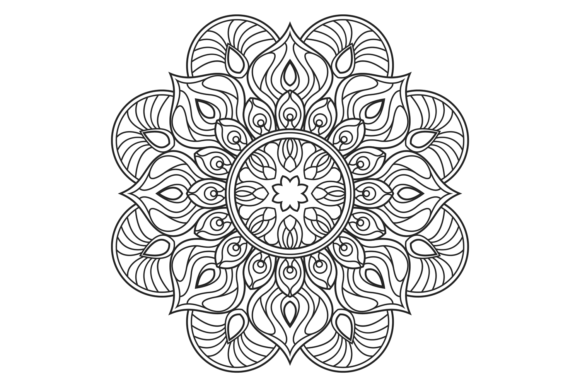
When we talk about Mandala Line Drawing, we aren't discussing a traditional serif font or a standard sans serif typeface. Instead, we are looking at a specialized category of design assets that functions as both illustration and typography. Specifically, the "Decorative Indian" style refers to intricate vector graphics—often available as EPS, SVG, or transparent PNG files—that mimic the visual weight and rhythm of letterforms. These assets are built on the principles of sacred geometry, featuring concentric circles, radial symmetry, and complex repetitive patterns that radiate outward from a center point.
The visual personality of a Mandala Line Drawing is distinct. It is meditative, symmetrical, and highly detailed. Unlike a handwritten font that flows with organic irregularity, or a modern typography set that relies on minimalism, the Mandala style is about abundance and precision. The "line drawing" aspect is crucial here; it suggests a monochromatic, outline-only aesthetic. This makes it incredibly versatile for etching, foil stamping, and single-color printing. When you utilize these design assets, you are importing a sense of history, tradition, and mindfulness into your project. The visual appeal lies in the complexity of the negative space and the hypnotic quality of the geometric repetition, creating a focal point that draws the viewer’s eye inward.
Strategic Applications: From Brand Identity to Editorial Layouts
The versatility of Mandala Line Drawing extends far beyond simple decoration. For brand identity designers, these assets offer a powerful way to establish a niche aesthetic. If you are working with a yoga studio, a wellness center, a holistic skincare brand, or a boutique travel agency focusing on spiritual retreats, this visual style acts as an instant identifier. You can use a mandala as a central emblem in logo design, or extract specific segments of the design to create unique borders and background textures.
In the realm of packaging design, the isolated nature of these vectors allows for stunning results. Imagine a matte black box for a luxury candle with a single, gold-foiled Mandala line drawing on the lid. The line work provides the "premium font" feeling of quality and craftsmanship. For editorial design, such as magazine covers or book jackets, a mandala can serve as a dramatic background element. By placing it behind typography—perhaps a clean serif font or a bold geometric sans serif font—you create a sophisticated contrast between the ancient pattern and modern layout.
Digital applications are equally robust. For social media graphics, a mandala frame can be used to highlight quotes or announcements, instantly elevating the perceived value of the content. In web design, these assets work well as "hero" images or loading animations. Because they are available as transparent PNGs and SVGs, they scale perfectly across devices without losing resolution, ensuring a professional user experience. Even for crafters and hobbyists, the utility is undeniable; these files are perfect for vinyl cutting machines, allowing for intricate decals on glassware, apparel, and home decor.
Technical Considerations and Pairing Strategies
Integrating a Mandala Line Drawing into a project requires a thoughtful approach to font pairing and layout balance. Because mandalas are visually dense and complex, they demand simplicity from their typographic partners. You generally want to avoid pairing them with a highly decorative script font or a creative font with excessive swashes, as this will result in visual clutter.
Instead, lean toward structure and clarity. A geometric sans serif font often works best for modern branding, as the clean lines of the letters allow the intricate mandala patterns to breathe. Alternatively, a classic serif font can bridge the gap between traditional and contemporary, adding a touch of elegance to the spiritual design. When using these assets, pay close attention to scale. If the mandala is too small, the line details will blur; if it is too large, it may overpower your text hierarchy.
For small business owners and entrepreneurs, evaluating the technical specs of the asset is vital. Ensure the file formats (EPS, SVG, JPG) are compatible with your software, whether it’s Adobe Illustrator, Canva, or Procreate. Check the licensing terms carefully; a commercial font or asset license is required if you intend to sell merchandise featuring the design. Finally, consider the "weight" of the lines. A thin line drawing offers a delicate, lace-like appearance suitable for high-end stationery, while a thicker line drawing provides bolder contrast, making it better suited for signage or large-scale prints.
Enhancing User Engagement Through Visual Harmony
Ultimately, the goal of using Mandala Line Drawing assets is to create an emotional resonance with your audience. In a crowded digital landscape, visual harmony is a rare commodity. These decorative elements tap into a psychological desire for order and balance. When a viewer sees a well-executed mandala in your design, it subconsciously signals stability and care.
For content creators and marketers, this translates to higher engagement. A visually calming background or a beautifully framed call-to-action can keep users on a page longer. It transforms a generic marketing message into an experience. However, restraint is key. The most effective designs use the mandala as a supporting character rather than the protagonist. Let the line drawing enhance your message, not drown it out.
When selecting your specific style of Decorative Indian ornament, look for assets that offer transparency. A transparent background is essential for layering the mandala over photographs or textured backgrounds without the tell-tale white box around it. By treating these illustrations with the same respect you would give a premium font—investing in high-quality vectors and using them intentionally—you can elevate the professionalism of your work and create a lasting brand identity that feels both timeless and culturally rich.